Sunday, April 18, 2010

Tulipmania

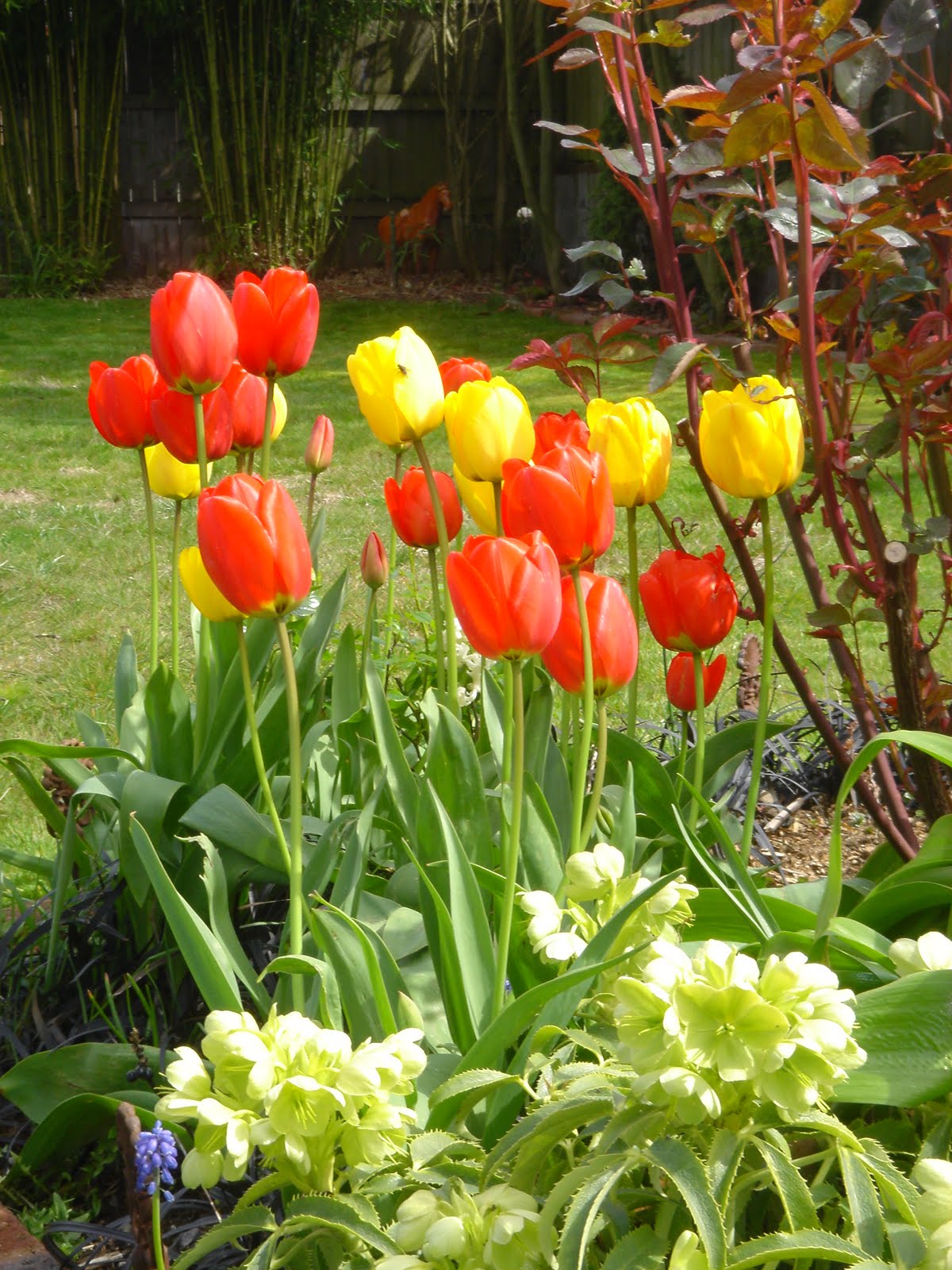
The classic Dutch method of planting tulips is color-coordinated, perfect rows. It makes a display like nothing else for a few short weeks. In formal (and rich!) gardens, the plants are then pulled up and thrown away to make room for annuals, and the beds are designed again with fresh bulbs in the fall.

For home gardeners, this seems wasteful, not to mention lots of work. But the problem with keeping spring bulbs in the ground is they need to die back naturally after bloom to replenish the bulb. This leaves an unsightly mess of yellow drooping leaves for several weeks, just when you want your garden looking spiffy for early summer.

I was reading in a magazine (Martha Stewart, again) that it's become trendy to naturalize tulips and place bulbs more-or-less randomly in perennial beds. Once the tulips fade, the other flowers take over while the tulip leaves have a chance to die back and regenerate.

When you've been doing something for years out of simple laziness, it's always nice to hear from Martha that you've been stylish all along. I haven't planted new tulips bulbs for a long time, but plenty still come back willy-nilly each April. They don't multiply in the ground, but the big yellows and reds are especially long-lived.
Tulip season doesn't last long, but what a wonderful flower. In fact, you could say tulips are the world's most coveted flower. Ever heard the phrase Tulipmania?


Saturday, April 17, 2010

Friends are important

Here's a few pictures Amanda took this week of Nova and her baby friends. These little folks were all born within a few weeks of each other. Talk about lifelong friendships for babies and mommies!
Enjoying the spring sunshine after a long winter...
Sharing a few laughs...
Or a private joke between girls.
Of course, being alone isn't bad either--as long as you have just a few things to play with!

Friday, April 16, 2010

And the livin' is easy...

One of the miracles of our city barn is there are several grass pastures the horses can enjoy in the summer. You can see how completely urban the setting is, with houses surrounding the property on all sides. Which makes this little horse oasis even more magical.

We can't use the pastures in the winter, or they would be churned into a sea of mud. In the wet months, the horses are outside in gravel paddocks instead. But when the weather dries out and grass starts growing again, the pastures are "open" for summer enjoyment. For fairness sake, the horses rotate turns in the fields, so a few times a week they can eat grass and roll around on the warm ground.

The sweet, green grass must taste wonderful in the spring. After I rode yesterday, Sizzle didn't lift her head all afternoon. She loves dandelions, especially the flowers. Lucky horse...spending the afternoon at an all-you-can-eat salad bar, and oblivious to the city around her.

Thursday, April 15, 2010

Malibu Potteries


Many vintage California homes feature beautiful Malibu Pottery tiles. The May issue of Martha Stewart magazine has an article about the exquisite Adamson House in Malibu. What really caught my eye was this magnificent "carpet" made of 670 tiles, right down to the fringe. It was designed by Malibu Potteries for the house in 1929. A detail of this hall floor is featured on page 92, as well as pictures of other rooms all lavishly decorated with California tiles.

The tile factory in Malibu operated for only seven years (1926-1932) so as you can imagine, these vibrant and intricate tiles (made with superior clay) are treasured collectibles. Enough to get the Antiques Roadshow folks excited. They're featured extensively in Adamson House, which is considered "The Shrine" of California tiles. When the house was built, a single family owned all the land in sight: 13,000 acres of ranch land high above the ocean. No mansions, no roads, no tourists.

Now owed by the state of California, the house is a museum that showcases the tile and the region's history. I'd love to see it the next time we're in southern California. If you don't get Martha's magazine, the museum also has a virtual tour on their website:

http://www.adamsonhouse.org/Tour/tour.html

Wednesday, April 14, 2010

Baby plums

This is what baby plums look like-- the little green nubs haven't fallen off (yet) but the jury is still out. Did the bees do their job? If so, we should finally have another nice crop this year. This variety is the Italian Prune, wonderful for cooking and eating. John asks for plum kuchen every summer. It just isn't the same when you have to buy the plums.

This is just to say

I have eaten

The plums

That were in

The icebox


And which

You were probably

Saving for breakfast.


Forgive me

They were delicious

So sweet

And so cold.

William Carlos Williams

Tuesday, April 13, 2010

Steamed mussels

Either you like them, or you don't. And the quality and size varies, too. A mouthful of too large mussel is not a pleasant sensation, and the tiny ones are hardly worth the effort. Since our new QFC opened nearby (Kroger to those of you back East) I've been getting good quality fish and shellfish at their counter service. Nice buys too-- these mussels were on special for $2.99 a pound last week.
Steaming is the basic method of mussel cooking, but there are all kinds of tasty concoctions like curry, wine and coconut milk that make them taste much better, and give you a nice "broth" to sop up with bread.
For these, I caramelized a generous amount of garlic in olive oil and butter, then thew in some parsley and a chopped tomato.
Here's the secret: put the mussels in the pot with the garlic, and add a generous splash of white wine. When the mussels open, they release plenty of water, so you don't need to cover them with liquid; it just dilutes the flavor of the "broth." Then put a tight lid on, and cook them on high for five minutes or so. (They turn to rubber if you boil them to death.)
We had a nice treat the other night with some Dungeness crab legs and good bread.